Understanding their different roles
Dogs can make an incredible difference in people's lives — but not every working or support dog has the same job, training, or public access rights. Some are trained to perform specific tasks for one person with a disability. Others provide comfort, support multiple people, or work alongside professionals in a specific setting. So, what's the difference?

Trained to help.
Assistance dog is the broad term for specially trained dogs that help people with disabilities. This includes guide dogs, hearing dogs, and service dogs — each specially trained to help mitigate the effects of a person's disability.
Guide Dogs
Helping people navigate safelyGuide dogs assist people who are blind or visually impaired by helping them navigate their surroundings.
Hearing Dogs
Alerting handlers to important soundsHearing dogs alert people who are deaf or hard of hearing to sounds like alarms, doorbells, or their name being called.
Service Dogs
Helping people live more independentlyService dogs perform specific tasks related to a person's disability — retrieving items, providing balance support, pulling a wheelchair, alerting to medical conditions, or assisting during a medical emergency.
Therapy dogs, facility dogs & ESAs.
Not every dog that provides support is an assistance dog. These roles serve different purposes — and don't carry the same public access rights as service dogs under the ADA.
Therapy Dogs
Bringing comfort to many peopleTherapy dogs visit hospitals, schools, libraries, and nursing homes to provide comfort and companionship. They're typically certified and permitted only where they've been invited to visit — they don't perform disability-related tasks or carry general ADA public access rights.
Facility Dogs
Supporting people in professional settingsFacility dogs are highly trained working dogs — trained by SDV to the same standard as our service dogs — who work alongside a professional like a therapist, teacher, or healthcare provider to support multiple people. Their access is limited to the professional setting where they work.
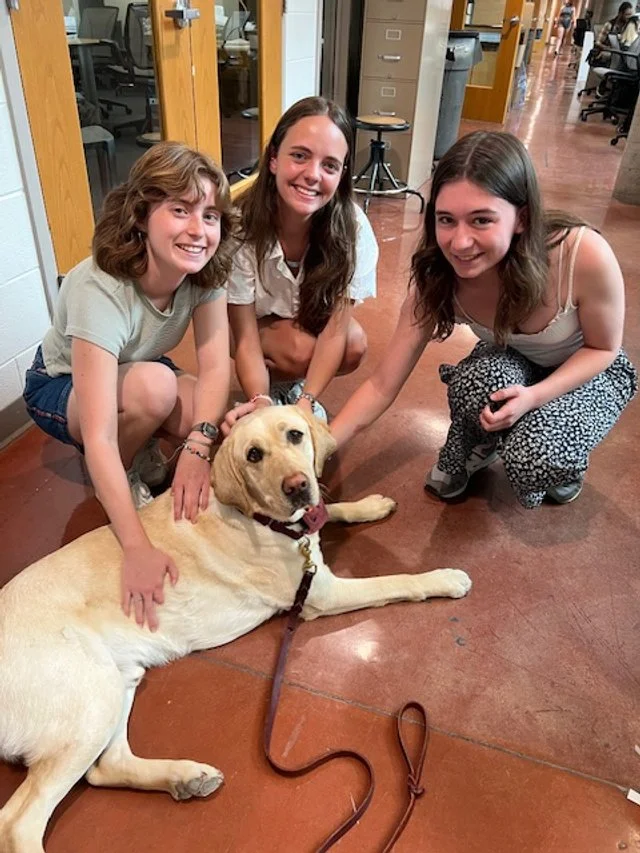
Emotional Support Animals
Providing comfort and companionshipESAs provide comfort to a person with a mental health or emotional condition. Unlike service dogs, they aren't trained to perform specific disability-related tasks and aren't covered by the ADA's public access provisions.
Not all working and support dogs have the same role.
A side-by-side look at training, access, and who each type of dog is trained to support.
| Has Training to Perform Task | Granted Public Access | Works for One Person | Works for Multiple People | Experience with Different Environments & People | |
|---|---|---|---|---|---|
| Assistance & Service Dogs | ✓ | ✓ | ✓ | — | ✓ |
| Emotional Support Animals | — | — | ✓ | — | — |
| Facility Dogs | ✓ | ✓ | — | ✓ | ✓ |
| Therapy Dogs | — | ✓ | — | ✓ | ✓ |
Know how to interact respectfully.
Understanding these roles is the first step. Here's how to act around a working dog and where to meet the teams they support.